
14 April 2025 — Liberation Day: The Tariff Shock That Erased $6.6 Trillion
The Rose Garden Announcement That Wiped $6.6 Trillion Off Global Markets in Two Days
April 14, 2025
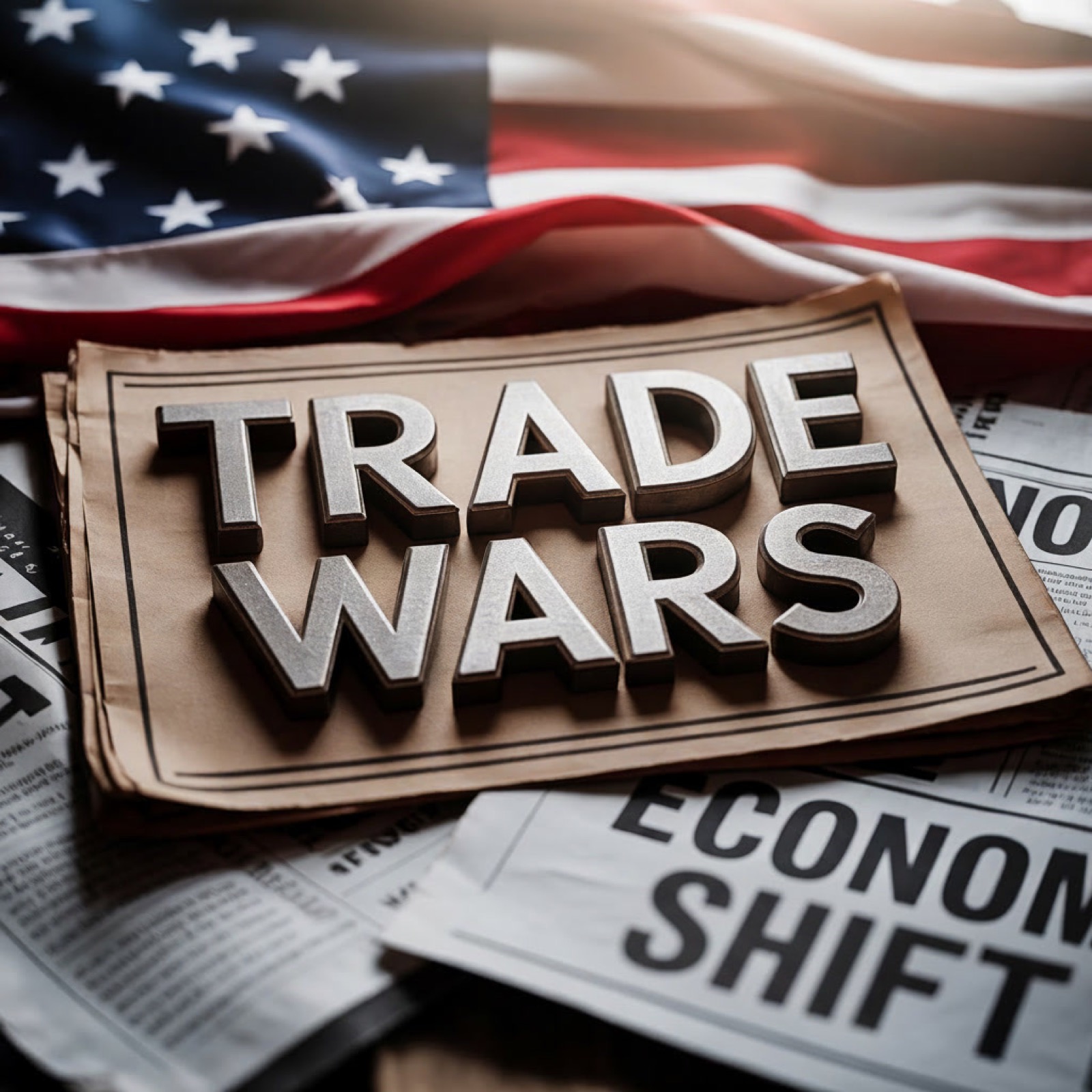
On 2 April, President Trump stood in the Rose Garden and signed an executive order he called “Liberation Day.” A flat 10% tariff on almost every U.S. import, with extra charges on dozens of countries — 54% on China (now 145%), 46% on Vietnam, 20% on the EU.¹ Trump said he chose 2 April because he “didn’t want it to be April Fool’s Day because then nobody would believe what I said.” They believed him. Within two trading days, the S&P 500 had lost 10%, the Nasdaq 11%. More than $6.6 trillion vanished — the worst two-day period in the history of the S&P 500.²
A tariff is a tax on goods crossing a border. For an American company that imports anything, a 10% tariff is effectively a 10% surcharge on costs. Nor is damage limited to importers: China imposed a 34% retaliatory tariff within 48 hours; Canada, the EU and several Asian partners announced countermeasures.² Oil fell 7%. The U.S. dollar, expected to strengthen under Trump, weakened sharply as foreign investors wondered whether the U.S. is still the safe-haven it has always been.
The decisive moment was in the bond market. The 10-year Treasury yield, which had been falling, suddenly jumped. The 30-year rose faster. Foreign holders — above all Chinese and Japanese institutions — were suspected of selling. It was this move, not the equity crash, that forced the White House to reconsider. On the evening of 9 April, Trump announced a 90-day pause on country-specific tariffs for most partners, leaving the 10% baseline in place. The move was reportedly pushed hardest by Treasury Secretary Scott Bessent.³
The reaction was enormous. On 9 April the S&P 500 rose 9.5% — its biggest single-day gain since October 2008. The Nasdaq rose 12.2%. Germany’s DAX surged 4.7%.⁴ Ray Dalio wrote on 7 April that this was the start of “a breakdown of the monetary, political and geopolitical orders.”⁵ Jamie Dimon warned tariffs “will likely slow economic growth in the U.S. and worsen inflation.”⁶ Bill Ackman, a Trump campaign supporter, called for a pause on 6 April: “The president is losing the confidence of business leaders.”⁷
As of today, markets are clawing back. The S&P 500 is still down more than 6% on the year. Much depends on the 90-day window. Three durable lessons: political risk is once again a first-order factor in markets; bond markets remain the ultimate arbiter — not the Nasdaq fall but the rise in long-dated Treasury yields forced the U-turn; and recoveries are often as fast as panics — an investor who sold at the 7 April low missed the 9.5% rebound 48 hours later.
References
- White House Executive Order 14257, 2 April 2025.
-
Wikipedia, 2025 stock market crash.
https://en.wikipedia.org/wiki/2025_stock_market_crash - Reuters reporting on the 9 April tariff pause.
-
CNBC, European markets coverage, 10 April 2025.
https://www.cnbc.com/amp/2025/04/10/european-markets-stocks-news-data-and-earnings.html -
Ray Dalio, LinkedIn post, 7 April 2025.
https://www.linkedin.com/in/raydalio/ -
JPMorgan Chase, Chairman Annual Letter 2024, 7 April 2025.
https://www.jpmorganchase.com/ir/annual-report - Bill Ackman, post on X, 6 April 2025.