
9 August 2024 — The Carry Trade Unwinds: Two Minutes That Shook Global Markets
Two Minutes in Tokyo: How One Small Rate Rise in Japan Made Global Markets Feel Like 1987
August 9, 2024
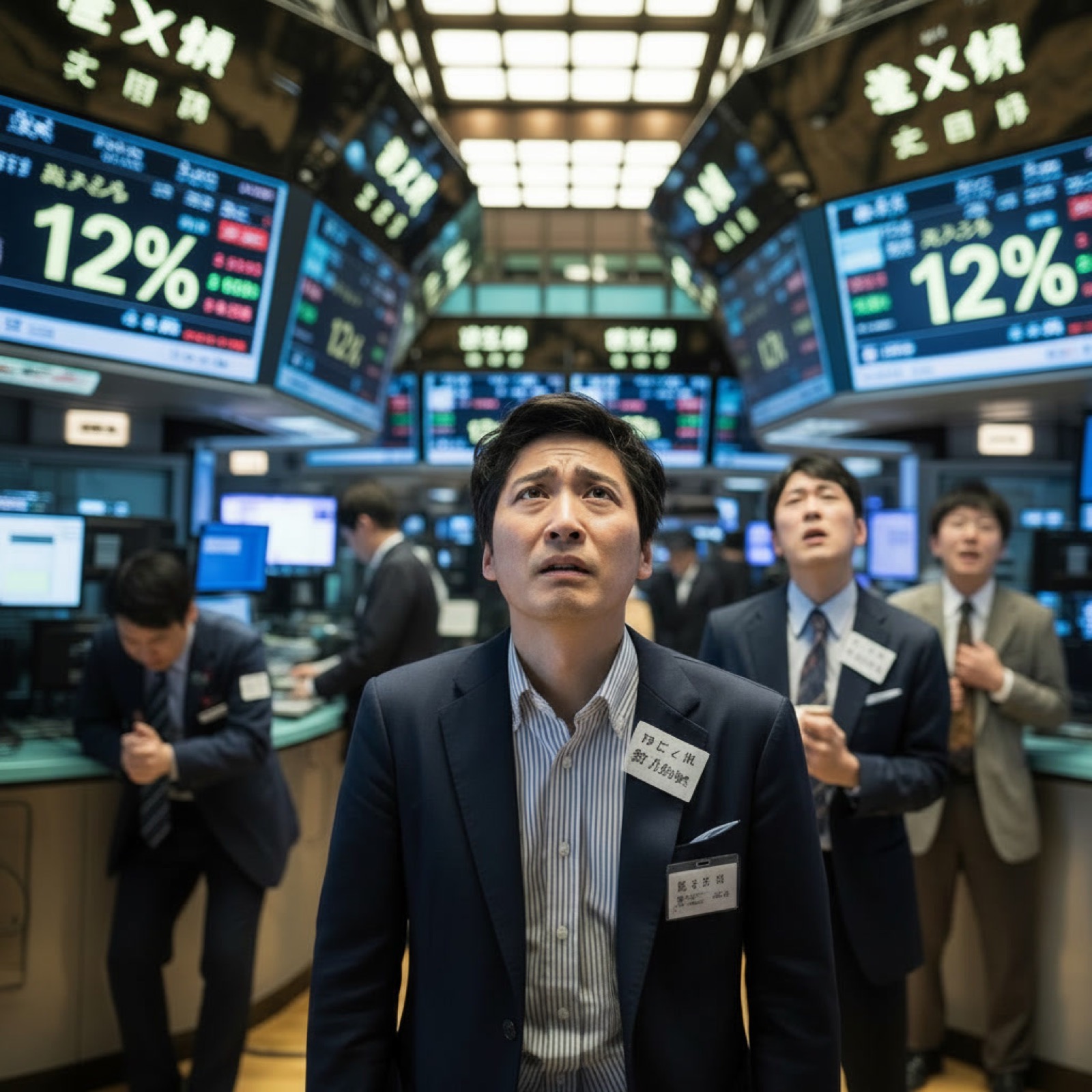
Early on Monday morning, anyone watching their phone in Asia saw numbers that did not look real. Japan’s Nikkei 225 had fallen more than 12% — the largest one-day decline since “Black Monday” in October 1987.¹ Over three sessions, Japanese shares had given back more than 20%. The VIX — Wall Street’s “fear index” — briefly touched 65 intraday, a reading seen only during full-blown crises. By the end of yesterday, most global indices had recovered almost fully.
The cause is a kind of financial plumbing most investors had stopped thinking about: the yen carry trade. For years, leveraged investors have borrowed in yen at near-zero rates and parked the proceeds in higher-yielding assets — U.S. tech shares, emerging-market currencies. Hundreds of billions of dollars of such trades have built up.² They work until they don’t — and when they stop, they stop for everyone at once.
Two triggers collided. On 31 July, the Bank of Japan raised its policy rate from 0.1% to 0.25% and hinted at more to come.³ Simultaneously, the U.S. Fed signalled it was ready to start cutting. The interest-rate gap narrowed from both ends. Then on 2 August, the U.S. jobs report showed just 114,000 jobs added and unemployment rising to 4.3%.⁴ That was the tipping point.
What followed was a cascade. Investors who had borrowed yen had to buy it back, pushing it sharply higher — more than 10% against the dollar in two weeks. The real damage was on the other side: positions funded with borrowed yen were losing money, so hedge funds had to sell whatever else they held. Because many owned the same things — big American tech shares — they were all selling simultaneously. Nvidia fell 6% on Monday despite nothing being wrong with its business.
The panic ended almost as fast as it began. On Wednesday, BoJ Deputy Governor Shinichi Uchida said the bank would “not raise policy rates when financial and capital markets are unstable.”⁵ The yen immediately weakened. U.S. data since Monday confirms July’s jobs report did not mark the start of a recession. And the underlying companies’ fundamentals had not changed. Once the forced selling stopped, buyers returned.
Three lessons. When markets fall fast on minor news, the reason is almost always leverage: someone you have never heard of is being forced to sell. Central banks still hold enormous power, but it is limited by the leverage built up in cheap-money years. And drawdowns like this are often excellent long-term entry points, provided the businesses you own are fundamentally sound — an investor who panicked and sold Monday has locked in a loss; one who held is back to where they started the week.
References
- Reuters and Bloomberg market reports, 5 August 2024.
-
Bank for International Settlements research on carry trades, 2024.
https://www.bis.org/ -
Bank of Japan Statement on Monetary Policy, 31 July 2024.
https://www.boj.or.jp/en/mopo/mpmdeci/state_2024/k240731a.pdf -
U.S. BLS, Employment Situation, July 2024.
https://www.bls.gov/news.release/archives/empsit_08022024.htm -
Bank of Japan, Deputy Governor Uchida speech, 7 August 2024.
https://www.boj.or.jp/en/about/press/koen_2024/data/ko240807a.pdf